

Sheikh Hamdan Tests Driverless Cars on Dubai Roads: What This Means for the Future of Real Estate and Urban Living
Dubai’s Crown Prince Leads the Way in Autonomous Vehicle Testing
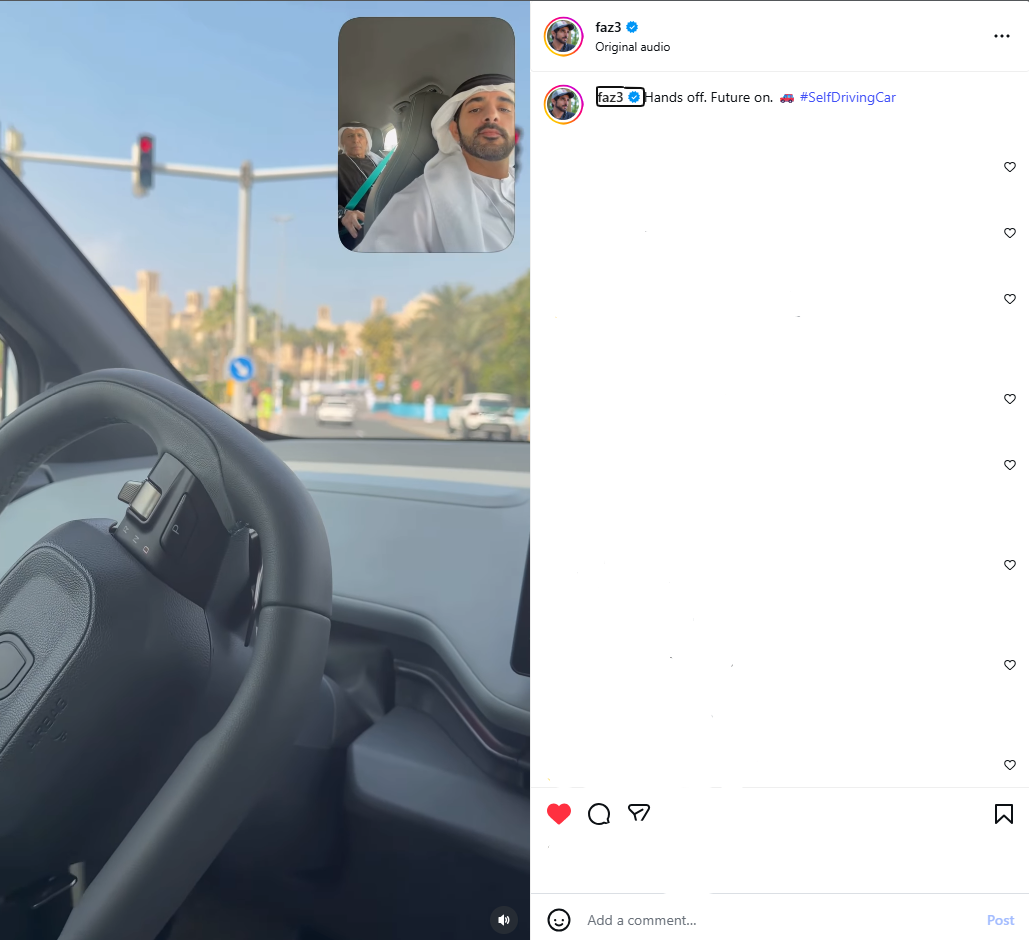
Dubai’s Crown Prince, Sheikh Hamdan bin Mohammed bin Rashid Al Maktoum, made headlines today by sharing an Instagram video of himself riding as a passenger in a driverless car on Dubai’s roads. The footage shows the Crown Prince calmly seated in the passenger seat while the autonomous vehicle navigates through Dubai’s urban landscape, marking another significant milestone in the emirate’s journey toward becoming the world’s smartest city.
This latest development isn’t just a technological showcase—it’s a glimpse into how Dubai’s transportation revolution will fundamentally reshape the real estate landscape for residents, investors, and businesses across the emirate.
The Real Estate Implications of Dubai’s Driverless Future
Transforming Property Values and Location Priorities
The widespread adoption of autonomous vehicles in Dubai is set to revolutionize how residents choose where to live and invest. Traditional real estate wisdom has always emphasized “location, location, location”—particularly proximity to Metro stations, major highways, and business districts. However, driverless cars are about to rewrite these rules entirely.
Key changes for property buyers and investors:
Reduced parking premiums: Properties with extensive parking facilities may see their premium value diminish as shared autonomous fleets reduce individual car ownership.
Distance becomes less relevant: Areas previously considered “too far” from business centers become more attractive when commuting becomes productive time.
New accessibility corridors: Neighborhoods along autonomous vehicle routes gain significant value appreciation potential
Impact on Dubai’s Master-Planned Communities
Dubai’s iconic master-planned communities like Dubai Hills Estate, Mohammed bin Rashid City, and Dubai South are already designed with future mobility in mind. The integration of driverless cars will enhance these developments’ appeal to both residents and investors.
For families and expats considering these areas:
Enhanced connectivity to schools, shopping, and entertainment without the stress of driving
Improved safety for children and elderly residents
Reduced household transportation costs, freeing up budget for premium housing options
What This Means for Different Property Segments
Residential Properties
Apartments and Villas: The demand dynamics are shifting significantly. Properties in previously car-dependent areas like Dubai Investment Park, Dubai Sports City, and outer areas of New Dubai are likely to see increased interest from buyers who previously avoided them due to commuting concerns.
Rental Market: Expats and professionals may be more willing to rent in affordable areas like International City or Dubai South, knowing that autonomous vehicles will provide seamless connectivity to their workplaces in DIFC, Downtown, or Dubai Marina.
Commercial Real Estate
Office buildings and retail spaces in emerging areas will benefit as driverless cars eliminate the “last mile” problem that has traditionally hindered commercial development in less central locations.
Investment Opportunities
Savvy investors should consider:
Off-plan projects in areas earmarked for autonomous vehicle infrastructure
Commercial plots along planned autonomous routes
Mixed-use developments that integrate seamlessly with smart transportation hubs
Timeline and Regulatory Framework
Dubai’s Roads and Transport Authority (RTA) has been preparing for this transition through several initiatives:
Dubai Autonomous Transportation Strategy: Aims for 25% of transportation to be autonomous by 2030
Smart traffic systems: Already implemented across major Dubai roads
Digital infrastructure: 5G networks and IoT sensors supporting autonomous vehicle operations
Sheikh Hamdan’s public test ride signals that the regulatory framework is advancing rapidly, with safety protocols and infrastructure readiness reaching mature stages.
Practical Considerations for Residents and Investors
For Current Homeowners
If you own property in Dubai, consider how autonomous vehicles might affect your area:
Central locations (Downtown, Marina, JBR) will maintain their premium status but may see reduced parking premiums
Suburban areas (Arabian Ranches, The Lakes, Emirates Hills) could see increased demand from buyers seeking larger homes with autonomous connectivity
Emerging areas (Dubai South, Al Furjan, Town Square) are positioned for significant value appreciation
For Property Investors
Short-term strategy (2026-2028):
Focus on areas with confirmed autonomous vehicle pilot programs
Consider properties near major autonomous vehicle charging/service hubs
Monitor RTA announcements for new route developments
Long-term strategy (2030 and beyond):
Diversify portfolios to include properties in currently undervalued areas with strong autonomous connectivity potential
Consider commercial properties that could serve the autonomous vehicle ecosystem
For Renters and Expats
The rental market is about to become much more flexible. Areas previously considered inconvenient due to transportation challenges will offer better value propositions. Expats arriving in Dubai should consider:
Exploring rental options in emerging communities with planned autonomous connectivity
- Factoring reduced transportation costs into housing budget calculations
- Considering longer-term rental commitments in areas positioned for autonomous vehicle integration
The Broader Vision: Dubai 2040 Urban Master Plan
Sheikh Hamdan’s driverless car test aligns perfectly with Dubai’s 2040 Urban Master Plan, which envisions a city where residents can access most services within a 20-minute journey. Autonomous vehicles are crucial to achieving this vision, particularly for:
- Connecting new urban centers to established business districts
- Enhancing public transportation integration
- Supporting sustainable urban growth patterns
Investment Recommendations for 2026
Based on current developments and Dubai’s autonomous vehicle roadmap:
Immediate opportunities: Properties in Dubai South, City of Arabia, and areas along Sheikh Mohammed bin Zayed Road
Medium-term prospects: Sustainable City, Dubai Hills Estate, and Mohammed bin Rashid City developments
Long-term potential: Emerging areas in Dubai’s northern and southern corridors
Conclusion: A New Era of Urban Living
Sheikh Hamdan’s confident ride in a driverless car through Dubai represents more than a technological milestone—it’s a preview of how the emirate’s real estate landscape will evolve. For investors, residents, and expats, this transformation presents both opportunities and challenges that require strategic thinking and local expertise to navigate successfully.
As Dubai continues to pioneer smart city innovations, staying informed about transportation developments will be crucial for making sound real estate decisions. The future of Dubai real estate isn’t just about location anymore—it’s about connectivity, accessibility, and integration with the city’s smart infrastructure ecosystem.
For personalized advice on how autonomous vehicle developments might impact your Dubai real estate decisions, consult with local experts who understand both the technological trends and market dynamics shaping the emirate’s future.

Leave a Reply