
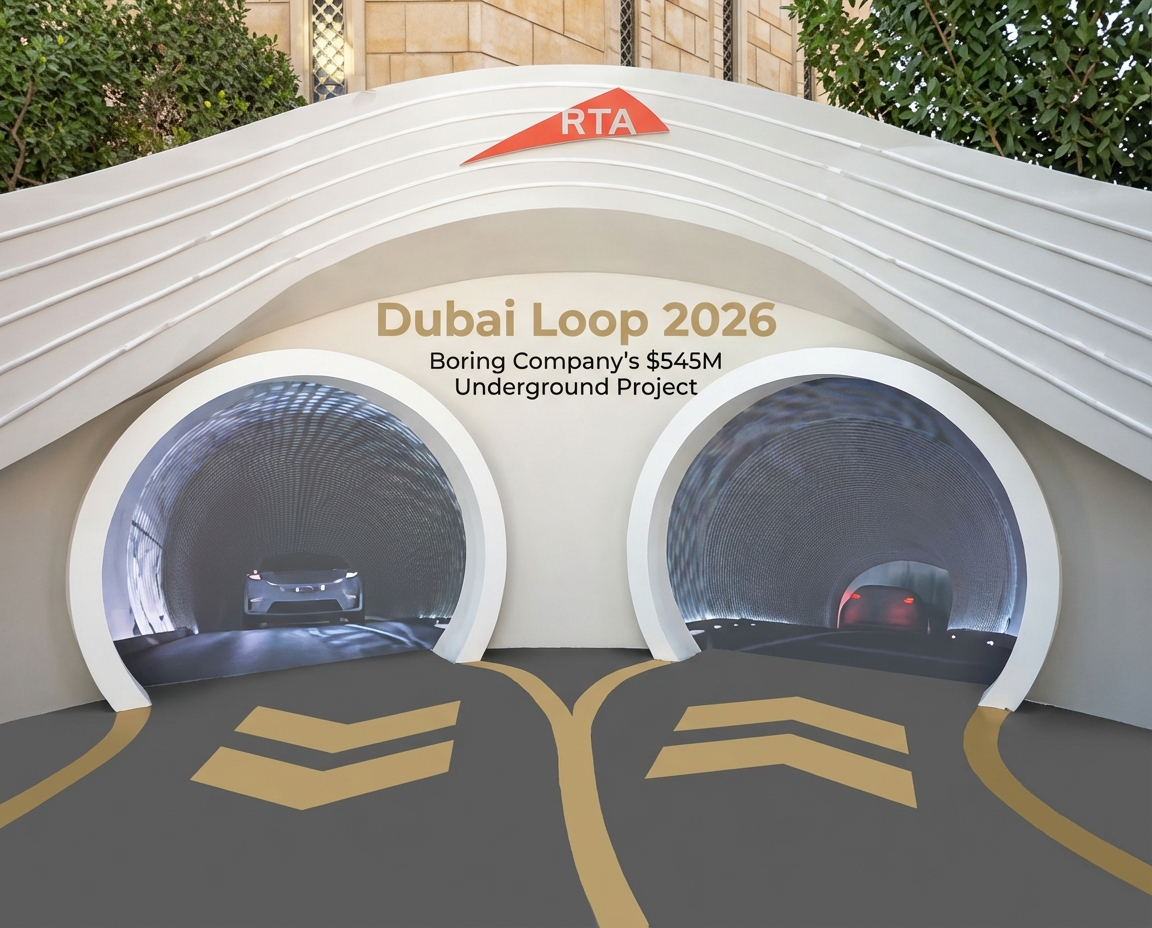
Dubai Loop 2026: The Boring Company’s Revolutionary Underground Transport System Transforming Dubai’s Future
What is Dubai Loop? Understanding Dubai’s Groundbreaking Underground Transport Project
Dubai Loop represents a transformative leap in urban mobility—a high-speed underground passenger transport system designed to revolutionize how residents and visitors navigate Dubai’s busiest districts. Unlike traditional surface roads, this innovative subterranean network utilizes electric vehicles traveling through dedicated tunnels to dramatically reduce travel times and eliminate surface traffic congestion.
On February 3, 2026, during the World Governments Summit (WGS) 2026, Dubai’s Roads and Transport Authority (RTA) formalized a definitive partnership agreement with The Boring Company—Elon Musk’s pioneering tunneling enterprise. This historic signing marks The Boring Company’s first major tunneling project outside the United States and positions Dubai as a global leader in next-generation urban transport infrastructure.
Dubai Loop Quick Facts (2026)
- Official Name: Dubai Loop underground transport system
- Developer Partnership: RTA (Roads and Transport Authority) + The Boring Company
- Tunnel Diameter: 3.6 meters (12 feet)
- Vehicle Type: Electric vehicles (driver-operated initially, autonomous-ready)
- Pilot Phase Length: 6.4 km (4 miles)
- Full Network Scope: 22-24 km with 19 stations
- Total Investment: AED 2 billion (~$545 million USD)
- Daily Capacity Target: 13,000-30,000+ passengers
- Travel Time Reduction: From 20 minutes to 3 minutes (DIFC to Dubai Mall)
Dubai Loop RTA and The Boring Company Partnership: Breaking Down the February 2026 Agreement
The Historic World Governments Summit Signing
The partnership agreement signed by Mattar Al Tayer (Director General and Chairman of RTA) and James Fitzgerald (Global VP of Business Development at The Boring Company) represents more than a construction contract—it’s a blueprint for Dubai’s transportation future.
Key Agreement Highlights:
- Immediate Construction Timeline: Work on the first phase begins immediately following design finalization
- Technology Transfer: The Boring Company brings proven tunneling technology from the Las Vegas Loop
- Scalability Framework: Agreement includes expansion pathways beyond initial 22 km network
- Sustainability Commitment: 100% electric vehicle fleet with zero surface emissions
- Smart Integration: Compatible with Dubai’s broader smart city initiatives
Why The Boring Company Chose Dubai for International Expansion
Dubai’s selection as The Boring Company’s first international project wasn’t coincidental:
- Proven Innovation Track Record: Dubai’s history with Hyperloop One testing and autonomous vehicle trials
- Regulatory Efficiency: Streamlined approval processes for infrastructure megaprojects
- Geographic Challenges: High temperatures make underground transport particularly attractive
- Strategic Vision: Alignment with Dubai 2040 Urban Master Plan
- Financial Capability: Government commitment to transportation infrastructure investment
Dubai Loop First Phase: The 6.4 KM Pilot Route Connecting Dubai’s Economic Heart
Dubai Loop Stations: The Four-Station Pilot Network
The initial 6.4 km tunnel section strategically connects Dubai’s most economically vital zones:
Station 1: Dubai International Financial Centre (DIFC)
- Gateway to the Middle East’s leading financial hub
- Direct access to 500+ financial institutions
- Estimated daily ridership: 3,000-5,000 passengers
Station 2: ICD Brookfield Place
- Serves Dubai’s expanding business district
- Connection point for Business Bay expansion
- Integrated with existing metro infrastructure
Station 3: Burj Khalifa / Dubai Mall Area
- World’s most visited destination (100+ million annual visitors)
- Reduced congestion around Sheikh Mohammed bin Rashid Boulevard
- Tourist and resident accessibility combined
Station 4: Zabeel Dubai Mall Parking
- Strategic parking integration reducing surface vehicle traffic
- Multi-modal transport hub potential
- Last-mile connectivity solution
Dubai Loop Construction Timeline and Cost Breakdown
Phase 1 Investment: AED 565 million (~$154 million USD)
Timeline Projection:
- Q1 2026: Final design and engineering (2-3 months)
- Q2 2026: Tunneling commencement (estimated 8-12 months)
- Q4 2026 – Q1 2027: Station construction and system integration
- Q2 2027: Testing and safety certification
- Target Opening: Late 2027 for pilot phase
The accelerated timeline leverages The Boring Company’s proven tunneling speeds (up to 1 mile per week under optimal conditions) and Dubai’s construction efficiency.
Travel Time Revolution: Dubai Loop DIFC to Dubai Mall in 3 Minutes
Current surface journey statistics paint a clear picture:
| Route | Current Time (Surface) | Dubai Loop Time | Time Saved |
|---|---|---|---|
| DIFC to Dubai Mall | 18-25 minutes (peak) | ~3 minutes | 85% reduction |
| Business Bay to Burj Khalifa | 12-18 minutes | ~2 minutes | 89% reduction |
| Full network traverse | 45-60 minutes | ~10-12 minutes | 80% reduction |
Traffic Congestion Impact:
- Estimated 15,000 fewer surface vehicles daily on Sheikh Zayed Road corridor
- 30% reduction in peak-hour congestion around Dubai Mall
- Annual carbon emission reduction: 12,000+ tons CO2
Dubai Loop Full Network: The 22-24 KM Vision Connecting Dubai’s Future
Complete Dubai Underground Loop System Scope
The comprehensive network expansion includes:
Total Stations: 19 strategic locations
Key Additional Connections:
- Dubai World Trade Centre: Exhibition and convention accessibility
- Business Bay Metro Link: Seamless multi-modal integration
- Jumeirah Beach Residence Extension (future phase consideration)
- Dubai International Airport (long-term expansion potential)
Network Specifications:
- Total Tunnel Length: 22-24 km dual tunnels (44-48 km total boring)
- Station Depth: 15-30 meters below surface (varies by location)
- Maximum Operating Speed: 240 km/h (similar to Vegas Loop)
- Average Station Spacing: 1.2-1.5 km
- Fleet Size: 100-150 electric vehicles (initial deployment)
Dubai Loop Capacity: Passengers Per Day Projections
Daily Ridership Estimates by Phase:
- Pilot Phase (2027-2028): 13,000-18,000 passengers/day
- Full Network (2029+): 30,000-45,000 passengers/day
- Future Expansion Capacity: 60,000+ passengers/day with fleet scaling
Peak Hour Performance:
- Vehicle frequency: Every 30-90 seconds per station
- Average wait time: Under 2 minutes
- Journey flexibility: Direct station-to-station routing (no mandatory stops)
Elon Musk Dubai Loop: How The Boring Company Technology Works
Tesla Tunnel Dubai: The Vehicle and Infrastructure System
Vehicle Specifications:
- Modified Tesla Model X and Model Y vehicles (current generation)
- Autonomous driving capability (Level 4-5 when regulations permit)
- Capacity: 4-16 passengers depending on vehicle configuration
- Zero emissions: Fully electric operation
- Accessibility features: ADA-compliant wheelchair access
Tunnel Engineering Innovation:
- Diameter: 3.6 meters (significantly smaller than traditional subway tunnels)
- Construction Method: Continuous boring with immediate concrete lining
- Safety Systems: Fire suppression, emergency evacuation routes, real-time monitoring
- Ventilation: Advanced air management without surface disruption
- Seismic Design: Earthquake-resistant engineering standards
Boring Company Dubai Contract: What Makes This Project Different
Technology Advantages Over Traditional Metro:
- Cost Efficiency: 50-70% lower per-kilometer cost than conventional subway
- Construction Speed: 10x faster tunneling using proprietary boring machines
- Surface Impact: Minimal disruption to existing infrastructure
- Flexibility: Easier route modifications and station additions
- Energy Efficiency: Direct electric vehicle transport vs. heavy rail
Comparison to Las Vegas Loop:
- Dubai Loop features deeper tunnels (handling higher water tables)
- Enhanced cooling systems for extreme surface temperatures
- Larger station capacity design for higher tourist volumes
- Integration with existing Dubai Metro and tram networks
Dubai Underground Transport Revolution: Benefits and Impact
How Dubai Loop Solves Dubai Traffic Congestion
Current Dubai Traffic Challenges:
- 3.6 million registered vehicles (2025 data)
- 60+ minutes average commute during peak hours
- 15% annual traffic growth rate
- Limited surface road expansion capacity
Dubai Loop Solutions:
- Dedicated High-Capacity Corridor: Removes thousands of vehicles from Sheikh Zayed Road
- Multi-Modal Integration: Seamless connections with Metro, tram, and bus systems
- Tourist Traffic Relief: Dedicated visitor transport reducing rental car dependence
- Business District Efficiency: Direct connections between major employment centers
Environmental and Economic Impact
Sustainability Benefits:
- Annual CO2 Reduction: 12,000-18,000 tons (equivalent to planting 200,000 trees)
- Energy Efficiency: 90% less energy per passenger-kilometer vs. private vehicles
- Air Quality Improvement: Measurable reduction in surface vehicle emissions
- Urban Heat Island Mitigation: Underground transport reduces surface asphalt needs
Economic Value Creation:
- Property Value Increase: 15-25% appreciation near Loop stations (projected)
- Business Productivity: 20+ hours per employee annually saved in commute time
- Tourism Enhancement: Improved accessibility to major attractions
- Job Creation: 2,000+ construction jobs, 500+ permanent operations positions
Dubai Loop Timeline 2026-2029: What to Expect
Detailed Construction and Launch Schedule
2026: Foundation Year
- Q1: Agreement finalization and site surveys (✓ Complete)
- Q2: Boring machine deployment and first tunnel breakthrough
- Q3-Q4: Continuous tunneling progress on pilot route
2027: System Development
- Q1-Q2: Pilot phase tunnel completion
- Q2-Q3: Station construction and finishing
- Q3-Q4: Vehicle fleet deployment and system testing
- Q4: Soft opening for pilot phase (limited operations)
2028: Expansion Phase
- Q1: Full pilot phase public operations
- Q2-Q4: Phase 2 tunneling (extending to World Trade Centre and Business Bay)
- Ongoing: Station additions and network expansion
2029: Network Maturation
- Full 22 km network operational
- Fleet expansion to meet demand
- Integration with planned Dubai 2040 transport corridors
Dubai Loop vs. URB’s The Loop: Understanding the Difference
Two “Loops” – Two Different Visions
Dubai Loop (RTA + The Boring Company):
- Type: Underground high-speed vehicle tunnel system
- Purpose: Fast passenger transport in dense urban areas
- Length: 6.4 km pilot, 22-24 km full network
- Technology: Electric vehicles in dedicated tunnels
- Status: Under construction (2026)
The Loop by URB:
- Type: Above-ground sustainable cycling and walking path
- Purpose: Active mobility and recreation
- Length: 93 km circumferential route
- Technology: Climate-controlled walkways and bike paths
- Status: Conceptual/planning phase
Both projects complement Dubai’s multi-modal transport vision but serve entirely different functions.
How to Experience Dubai Loop: Passenger Information
Expected Ticketing and Access (Based on Similar Systems)
Anticipated Pricing Structure:
- Integration with existing Nol card system
- Estimated fare: AED 5-15 per journey (similar to Metro pricing)
- Tourist passes and subscription options likely
- Possible premium pricing for direct non-stop services
Booking and Operations:
- Mobile app reservation system (similar to ride-hailing)
- Real-time vehicle tracking
- Pre-booking for guaranteed capacity
- Walk-up access at stations during off-peak hours
Accessibility Features:
- Wheelchair-accessible vehicles and stations
- Multi-language support (Arabic, English, Urdu, Hindi, Chinese)
- Visual and audio navigation assistance
- Family-friendly vehicle configurations
Dubai Loop Impact on Real Estate and Investment
Property Value Transformation Near Dubai Loop Stations
Historical Precedent from Dubai Metro:
- Properties within 500m of Metro stations appreciated 20-30% (2009-2015)
- Commercial rents near Metro increased 25-40%
- Development density increased significantly along Metro corridors
Dubai Loop Station Proximity Premium (Projected):
| Distance from Station | Residential Value Increase | Commercial Rent Increase |
|---|---|---|
| 0-200m | 20-30% | 30-45% |
| 200-500m | 15-25% | 20-35% |
| 500m-1km | 10-18% | 15-25% |
Investment Hotspots:
- Business Bay (future station integration)
- DIFC periphery properties
- Zabeel area residential developments
- Dubai World Trade Centre commercial zones
Future Expansion: Dubai Loop Beyond 2029
Long-Term Vision and Network Growth
Potential Phase 3+ Expansions:
- Dubai International Airport Connection: Direct Loop access to Terminal 3
- Palm Jumeirah Extension: Tourist destination accessibility
- Dubai Marina Link: Connecting western beachfront developments
- Expo City Dubai: Permanent legacy transport infrastructure
- Dubai Silicon Oasis: Tech hub connectivity
Integration with Hyperloop and High-Speed Rail:
- Potential connection points with future UAE Hyperloop network
- Integration with Etihad Rail passenger services (planned)
- Regional connectivity to Abu Dhabi and other Emirates
Technology Evolution:
- Full autonomous vehicle operations (no drivers)
- Larger capacity vehicles (up to 20 passengers)
- Higher frequency operations (every 15-30 seconds)
- AI-powered demand prediction and routing
Frequently Asked Questions About Dubai Loop
Q: When will Dubai Loop open? A: The pilot phase (DIFC to Dubai Mall) is expected to open in late 2027, with the full 22 km network operational by 2029.
Q: How much will Dubai Loop cost to ride? A: While official pricing hasn’t been announced, expect integration with the existing Nol card system with fares comparable to Dubai Metro (AED 5-15 per journey).
Q: Is Dubai Loop the same as Dubai Metro? A: No. Dubai Loop is a separate underground system using electric vehicles in smaller tunnels, while Dubai Metro is a traditional rail system. They will integrate at several connection points.
Q: Can tourists use Dubai Loop? A: Yes. Dubai Loop is designed for both residents and tourists, with simplified payment options and multi-language support anticipated.
Q: How fast is Dubai Loop? A: Vehicles can reach speeds up to 240 km/h in tunnels, though average speeds will be lower. The DIFC to Dubai Mall journey takes approximately 3 minutes versus 20+ minutes on surface roads.
Q: Is Dubai Loop safe? A: Yes. The system includes comprehensive safety features including fire suppression, emergency evacuation routes, real-time monitoring, and meets international tunneling safety standards.
Q: Will Dubai Loop reduce traffic congestion? A: Yes. By removing an estimated 15,000 daily vehicles from surface roads and providing fast alternatives to car travel, Dubai Loop will significantly reduce congestion in central Dubai.
Q: How does Dubai Loop compare to other Boring Company projects? A: Dubai Loop is The Boring Company’s first international project and features longer tunnels, more stations, and deeper integration with existing public transport than the Las Vegas Convention Center Loop.
Conclusion: Dubai Loop as a Model for Global Urban Mobility
The Dubai Loop project represents more than innovative infrastructure—it’s a bold statement about the future of urban transportation. By partnering with The Boring Company, Dubai has positioned itself at the forefront of the underground transport revolution, offering a scalable, sustainable solution to modern city mobility challenges.
As construction progresses through 2026 and beyond, Dubai Loop will demonstrate whether high-speed underground electric vehicle networks can complement or eventually replace traditional mass transit systems. For residents, businesses, and tourists, the promise is clear: faster journeys, reduced congestion, and a more sustainable urban environment.
Key Takeaways:
- Dubai Loop is now under construction following the February 2026 RTA-Boring Company agreement
- The pilot phase connects Dubai’s most critical business and tourism zones
- Expected travel time reductions of 80-85% compared to surface roads
- Full network completion anticipated by 2029 with 19 stations across 22-24 km
- This project marks The Boring Company’s first international expansion
Stay updated on Dubai Loop construction progress, station openings, and ticket information as Dubai transforms its transportation infrastructure for the next generation.

Leave a Reply